Avatar de Desconocido

Acerca de Nicolas Cachanosky

Associate Professor of Economics Director - Center for Free Enterprise The University of Texas at El Paso

Extinción de dominio por DNU: La política del revanchismo

Hace unos días Mauricio Macri firmó un controversial decreto de necesidad y urgencia (DNU) al través del cual se acelera la extinción de dominio (la figura legal sería de confiscación) de bienes adquiridos aún bajo sospecha (sin condena firme) de corrupción (los documentos se encuentran aquí y aquí). El decreto es controversial por un número de motivos, principalmente por ser muy posiblemente inconstitucional. Varios constitucionalistas se han expresado sobre esta cuestión (abogados especialistas en el tema están invitados a comentar en este post). Lo curioso, por no decir preocupante, son las reacciones en defensa que se dieron desde el gobierno y desde varios defensores de Cambiemos. Se percibe un entusiasmo revanchista que no es sano para las instituciones.

Antes de hacer una mención sobre este revanchismo, qué dicen los constitucionalistas consultados por los medios sobre este DNU (aquí, aquí, y aquí)?
Sigue leyendo

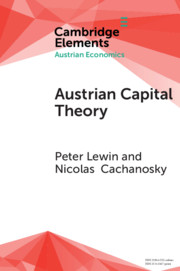
Austrian Capital Theory: A Modern Survey of the Essentials

Mi último libro con Peter Lewin ya se encuentra disponible en Cambridge University Press en la nueva colecciones Elements of Austrian Economics editada por Peter Boettke.

En este corto libro hacemos una evolución histórica de la teoría del capital incluyendo un breve exposición del análisis financiero que hemos trabajado en los últimos años

El libro es de libre acceso hasta el primero de febrero.

WP: The Grecian Horse II

Borrador, junto a «Alex» Padilla de The Grecian Horse. En esta serie de papers estudiamos si los inmigrantes importan «mala» instituciones a los Estados Unidos de sus países de origen.

Abstract

In recent years, in response to an increasing literature pointing to the economic deadweight loss associated with immigration restrictions, a literature has emerged pointing to the negative economic repercussions on economic growth would increasing immigration from countries with poor institutions have on the quality of the host country’s institutions when these immigrants import their institutions into their host countries (Borjas, 2014, 2015). Since then economists have attempted to test whether immigrants have a negative impact on their host country’s institutions (Clark et al., 2015; Powell, Nowrasteh, and Clark, 2017; Padilla and Cachanosky, 2018). This paper builds on Padilla and Cachanosky (2018) and examines how immigrants grouped according to the Economic Freedom of the World quartile their country of origin was ranked at time of the census may impact the economic institutions of the states as measured by Economic Freedom of North America index. Our results show that, in the short run, we do observe that the relationship between migrants originating from countries with poor economic institutions and economic freedom is negative, but, in the longer run, that relationship becomes positive, particularly, in the area of labor market freedom. On the other hand, in the longer run, the relationship between migrants coming from most economically free countries and economic freedom is negative. Our results are robust to various specifications.

Acceder al paper en SSRN.

Inflación 2018

Se conocieron los datos de inflación del 2018 y, con este numero, cuál fue la inflación en los primeros tres años del gobierno de Cambiemos. A continuación dos gráficos. El primero con la inflación interanual de 1999 a la fecha. El segundo con la inflación mensual (en barras) y acumulada de los últimos 3 años. El 2018 cerró con la inflación más alta desde el final de la hiperinflación. En materia de inflación, Cambiemos tiene un triste record aún por revertir.

Sigue leyendo

La Racionalidad del Desprestigio Político

El mundo político suele estar rodeado de un aura de desprestigio. Una nube de corrupción (moral) suele rodear a no pocos partidos políticos. El kirchnerismo es quizás un caso extremo de este problema. Incluso luego de dejar el poder, este movimiento político no ha siquiera intentado limpiar su imagen. Este comportamiento no es necesariamente irracional, se puede ver como un comportamiento orientado a proteger su rent seeking.

Protegiendo al grupo

Pensemos en un partido político como un grupo de bandidos a la Mancur Olson. En la medida que el objetivo del partido político sea extraer rentas (como tantos casos ilustran Acemoglu y Robinson (2013) en Why Nations Fail?), entonces los miembros del partido político tienen interés en que los otros miembros sean team players.

Sigue leyendo

Demanda y Oferta de Cambio Institucional

Supongamos que luego de 12 años de gobierno kirchnerista (o 4 u 8 de Cambiemos), un nuevo gobierno asume con la bandera de la promesa de un cambio institucional profundo. No cambios de cosmética fiscal, sino verdaderos cambios institucionales y culturales en las reglas de juego de la sociedad y economía del país. Este cambio institucional puede darse vía demanda o vía oferta de cambio.

Sigue leyendo

WP: A Panel Data Analysis of Latin American Populism

Nuevo working paper sobre populismo con Alexandre Padilla. En esta ocasión realizamos un análisis de panel sobre cinco países «populistas» en Latino América. Los resultados coinciden con los del control sintético de Grier y Maynard (2016) para Venezuela.

This paper studies the impact of 21st century populism in Latin America on income and human development. We find a significant economic cost of populism that is consistent with other studies using a different methodology than ours. Our sample consists of five Latin American countries representative of populist governments: Argentina (2003 – 2015), Bolivia (since 2006), Ecuador (since 2007), Nicaragua (since 2007), and Venezuela (since 1999).

Acceder al borrador en SSRN.

AIER: What’s Wrong With Argentina?

In the last few months, Argentina has seen a series of currency crises as an excessive reaction to international events and changes in market conditions. While to some extent the problem is due to foreign shocks, much of it is also due to Argentina’s own wrongdoing. Argentine monetary policy was a crisis waiting to happen. Why did Argentina have a larger currency crisis than other countries, and how did it get there?

When Mauricio Macri took office in December 2015, he found a challenging economic situation. The previous administration, that of Cristina F. de Kirchner, monetized its large fiscal deficits, producing rates of inflation of 20–30 percent. Macri’s administration and the new central bank authorities tried to reduce the inflation rate faster than the fiscal deficit.

During Macri’s first year in office, government spending and the deficit increased in real terms. Only in the second year did the deficit start to fall. The treasury received less assistance from the central bank and issued more foreign debt instead. However, since the foreign debt was denominated in dollars but spending was in Argentine pesos, the central bank issued pesos to buy the dollars collected from the debt issued by the treasury. Then the central bank sterilized the newly issued pesos by issuing its own short-term bonds, Letras del Banco Central (Lebacs). Both financial institutions and households were allowed to invest in Lebacs.

Continue reading at AIER.

Austrian Capital Theory: A Modern Survey of the Essentials

For some time now, Peter Lewin and I have been working on the implications of applying finance to capital theory. This work has taken place mostly in journal articles.

We now offer a short book on the historical development of Austrian Capital Theory (ACT). This book is a part of the new «Elements» series by Cambridge University Press. The book is part of Elements in Austrian Economics edited by Peter Boettke.

The book is scheduled to be published in January (2019), but is already available to pre-order.

Book description

This Element presents a new framework for Austrian Capital Theory, starting from the notion that capital is value. Capital is the value attributed by the valuer at any moment in time to the combination of production-goods and labor available for production. Capital is the result obtained by calculating the current value of a business-unit or business-project that employs resources over time. It is the result of a (subjective) entrepreneurial calculation process that relates the flow of consumptions goods to the value of the productive resources that will produce those consumptions goods. The entrepreneur is a ubiquitous calculating presence. In a review of the development of Austrian Capital Theory, by Carl Menger, Eugen von Böhm-Bawerk, Ludwig von Mises, Friedrich Hayek, Ludwig Lachmann as well as recent contributions, the Element incorporates the seminal contributions into the new framework in order to provide a more accessible perspective on Austrian Capital Theory.